
Leaving hospital after a stroke can bring relief, but it can also leave you and your family with many questions.
What happens when NHS sessions become less frequent? Could more physiotherapy or occupational therapy help? Can you arrange private stroke rehabilitation yourself? What does neurotechnology actually do, and how do you know which treatment is right for you?
The short answer is that you can self-refer to Resilience Neuro Specialists without a GP referral. Our usual first step is a 90-minute NeuroTech Discovery Session at the Resilience Therapy Centre in Stareton, Warwickshire. This gives us time to understand your recovery, explore the goals that matter to you and identify appropriate next steps.
Important: This guide is about rehabilitation after a diagnosed stroke. If you or someone with you develops new or sudden facial weakness, arm weakness, speech problems or other possible stroke symptoms, call 999 immediately.
Recovery does not end when you leave hospital
Around 85,000 people have a stroke in England each year, according to NHS England. The effects vary widely. A stroke can affect movement, balance, speech, swallowing, vision, memory, concentration, mood, fatigue and a person’s confidence in everyday life.
Being medically stable enough to return home does not necessarily mean that rehabilitation goals have been achieved.
The NHS guidance on stroke recovery explains that recovery may take weeks, months or years. It can involve physiotherapy, speech and language therapy, cognitive rehabilitation, psychological support and help with returning to everyday activities.
NICE guidance on stroke rehabilitation also says that care and rehabilitation should continue after hospital for as long as it is helping the person achieve their treatment goals.
For one person, the priority might be walking safely to the bathroom. For another, it could be using their affected hand, returning to work, preparing a meal, communicating more easily or going out with friends. Good rehabilitation connects treatment to these real-life goals.
What is private stroke rehabilitation?
Private stroke rehabilitation is specialist support that you arrange and fund yourself, through insurance or as part of a legal claim.
It can work alongside NHS care. It does not require you to give up NHS appointments, and it should not replace medical follow-up, prescribed medication or advice from your stroke consultant or GP.
People often explore private rehabilitation because they:
- Want additional therapy after leaving hospital
- Have ongoing problems with walking, balance, arm or hand movement
- Need help with fatigue, memory, speech, mood or everyday activities
- Want more time to work towards personal goals
- Are waiting for community services
- Need rehabilitation at home or in a specialist centre
- Want access to neurotechnology that is not locally available
- Are preparing to return to work, education, driving assessments or community life
There is no single programme that is right for everyone. Your treatment should reflect how the stroke has affected you, your medical needs, your tolerance for therapy and what you want to achieve.
Can I self-refer for stroke rehabilitation?
Yes. Resilience Neuro Specialists welcomes self-referrals from stroke survivors and their families. You do not need a GP referral.
To get started, complete our contact form and select Book a NeuroTech Discovery Session as the type of enquiry.
We will need some initial information so that the team can understand your circumstances and plan safely. This may include:
- When your stroke happened and when you left hospital
- The hospital or rehabilitation service that supported you
- How the stroke has affected your movement, communication and daily life
- Any problems with falls, pain, fatigue, seizures, swallowing or changes in thinking
- Relevant medical conditions and current medication
- The equipment or walking aids you use
- The NHS or private professionals currently involved
- Your most important rehabilitation goals
- Whether you are looking for centre-based or home-based support
We may ask you to complete a self-referral form and provide relevant discharge summaries, therapy reports or medical information. With your permission, our team can communicate with other professionals involved in your care.
What is a NeuroTech Discovery Session?
The NeuroTech Discovery Session is a 90-minute appointment at the Resilience Therapy Centre in Stareton, near Coventry. It currently costs £195.
The session gives you and your family time to:
- Explain what has happened and how recovery is progressing
- Discuss the activities and roles that matter most to you
- Meet a member of the specialist team
- Explore your current movement or functional difficulties
- Try selected neurotechnology where it is clinically appropriate
- Ask questions about rehabilitation
- Discuss what a personalised programme might involve
- Establish baseline information that can be used to measure progress
The technology selected will depend on your presentation and goals. It might include gait analysis, supported walking equipment, interactive movement systems or technology for arm and hand practice. You do not need to know which device you require before attending. Choosing equipment is part of the clinical process.
Wear comfortable clothing that allows you to move and bring any walking aids, splints or supports you normally use. You may also find it helpful to bring a family member or carer, particularly if fatigue, memory or communication makes it difficult to take in a lot of information at once.
Unable to travel to the centre? Please still contact us. Where travel is difficult or not possible, a member of our specialist team may be able to visit you at home to assess your needs, discuss your goals and recommend appropriate next steps. Some neurotechnology is only available at the Resilience Therapy Centre, so we will explain which home-based and centre-based options may be suitable.
How can neurotechnology support stroke rehabilitation?
Neurotechnology can help therapists observe movement, provide feedback, support repeated practice and collect measurements over time. For example:
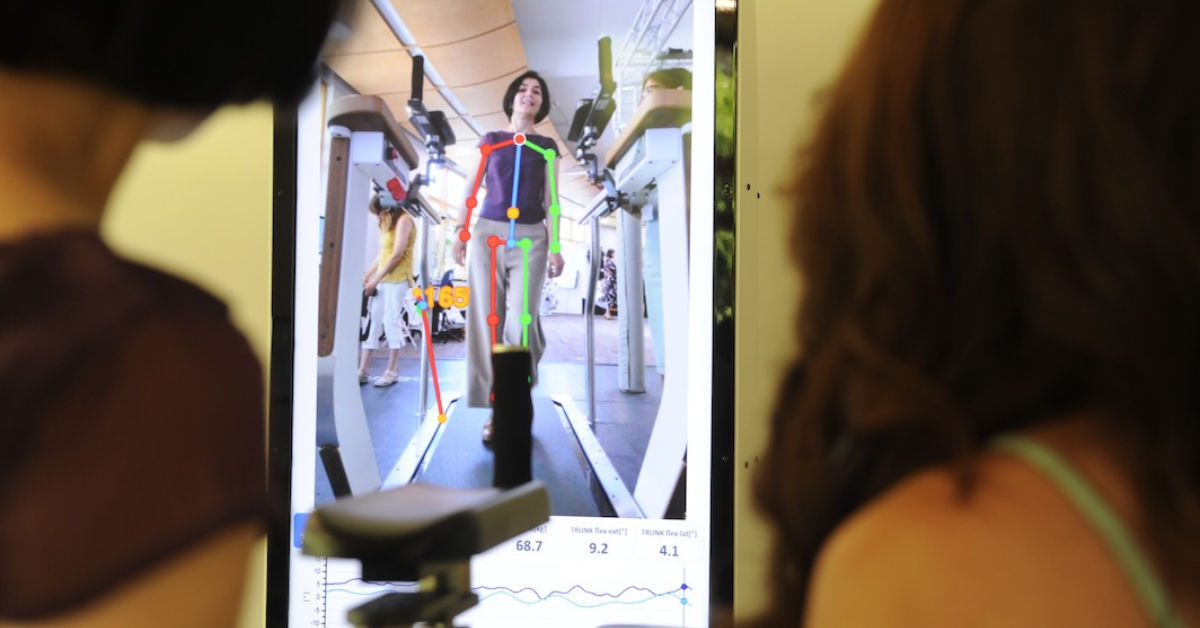
- Walker View combines treadmill practice with movement analysis and real-time feedback about walking and weight distribution.
- Lexo provides supported, repetitive walking practice with adjustable assistance.
- Amadeo supports structured hand and finger movement practice.
- Pablo uses sensors and interactive activities for the arm, shoulder and trunk.
- Fesia Grasp uses functional electrical stimulation to support selected hand movements.
- D-Wall and Smart Gravity 3D can be used for movement analysis, balance and supported activity.
You can explore our neurotechnology available at the Resilience Therapy Centre. Neurotechnology should have a clear purpose. At Resilience, it is used selectively within clinician-led physiotherapy or occupational therapy. It complements hands-on treatment, functional practice, education and activities that connect directly to everyday life.
What treatment could be recommended after the session?
Following the NeuroTech Discovery Session, we will explain which next steps appear most appropriate. Recommendations could include one or more of the following services.
Neuro physiotherapy
Neuro physiotherapy may address strength, balance, posture, walking, stamina, foot drop, muscle stiffness and confidence with movement. Treatment can combine hands-on techniques, targeted exercises, walking practice and selected neurotechnology. Progress can be reviewed using recognised measures as well as changes that matter in daily life.
Neuro occupational therapy
Occupational therapy focuses on the activities a person needs or wants to do. This may include washing, dressing, cooking, managing fatigue, using the affected arm and hand, returning to work, improving confidence at home, using public transport or getting back to hobbies and social activities. An occupational therapist may also recommend equipment, adaptations, cognitive strategies or changes to the home environment.
Speech and language therapy
Speech and language therapy can support people experiencing difficulties with speech, language, communication or swallowing. It can also help families learn ways to make conversations more accessible and reduce frustration.
Neuropsychology and neuropsychiatry
A stroke can affect mood, behaviour, memory, concentration, emotional control and a person’s sense of identity. Neuropsychology or neuropsychiatry may be recommended when these changes require specialist assessment and support.
Neuro dietetics
Neuro dietetic input may be helpful where stroke has affected nutrition, weight, appetite, swallowing-related choices or the management of other health conditions.
Treatment can take place at the Resilience Therapy Centre or, where appropriate, in the person’s home and community.

Read Tilly’s stroke recovery story >>
After experiencing a sudden stroke at just 19, Tilly began a personalised rehabilitation programme focused on walking, balance, upper-limb movement and returning to the life that mattered to her.
With hands-on therapy and carefully selected neurotechnology, Tilly has made incredible, measurable progress. She is walking farther without a stick, has improved her grip and right-sided movement, and increased her active contribution on the Amadeo from 0% to around 30%.
But Tilly’s recovery is about much more than clinical measures – it is about working towards driving, employment, friendships and independence while remaining true to who she is.
Can private rehabilitation work alongside NHS stroke services?
Yes. Private and NHS rehabilitation can complement each other when there is clear communication.
Tell each team about the other professionals involved. Sharing goals, reports and relevant clinical information – with your consent – can reduce duplicated assessments and avoid conflicting advice. In fact, our specialist therapists work very closely with NHS teams, so you can continue to work towards your goals set with NHS teams with our private therapists.
Private rehabilitation should add value to your overall plan. It might provide additional therapy time, access to specialist equipment, work on a particular goal or support in environments such as your home, workplace or local community.
You should not stop attending NHS appointments because you have started private therapy.
How much does private stroke rehabilitation cost?
Prices below are correct as of August 2026 and should be checked before publication or booking.
- NeuroTech Discovery Session: £195 for 90 minutes
- Individual physiotherapy or occupational therapy at the centre: £160 per hour
- Ten-session centre package: £1,440
- Twenty-session centre package: £2,880
- Community physiotherapy or occupational therapy: £140 per hour plus travel costs
Fees for other disciplines will depend on the type of assessment or treatment required. The team will explain recommendations and costs before a programme begins. The length and frequency of rehabilitation will depend on your needs, goals, response to treatment, fatigue and available funding.
Frequently asked questions
Here you’ll find answers to stroke rehabilitation FAQs.
There is no single cut-off point that applies to everyone. The NHS explains that recovery can continue for months or years, while NICE says rehabilitation should continue for as long as it helps a person achieve treatment goals. An assessment can help determine whether further input is appropriate for you.
You can contact us after discharge, or while discharge is being planned. You should be medically stable and able to participate safely. We may request information from your stroke team before arranging treatment.
No. You can self-refer through the contact form. We may still need relevant medical information and your consent to speak with other professionals.
Yes. A family member or carer can help explain what has changed, share their concerns and remember the information discussed. The stroke survivor’s views and goals remain central to the session.
Yes, where home or community-based treatment is clinically appropriate. This can be particularly useful for practising everyday activities in the environment where they need to happen.
Every stroke recovery is different, so no device can guarantee faster results. However, neurotechnology can make therapy more intensive, engaging and measurable. It can support many more repetitions of a movement, provide immediate feedback and adjust the level of challenge as ability changes.
Interactive activities and game-based exercises can also help people stay focused and motivated during repeated practice. Therapists can use the data collected to monitor progress and adapt treatment. Neurotechnology works best when selected for a clear goal and combined with specialist, hands-on therapy and meaningful everyday activities.
Look for specialists with relevant neurological experience who are registered with the appropriate professional body. For example, the NHS advises checking that a private physiotherapist is registered with the Health and Care Professions Council. All Resilience therapists are.
Ask how the service will assess your needs, set goals, measure outcomes, manage clinical risks and communicate with your existing team.
Share your thoughts